Benefits of On-Farm Equine Chiropractic Care This Spring

Benefits of On-Farm Equine Chiropractic Care This Spring
Spring in the Santo, TX, Granbury TX, Fairfield/Mexia TX, Godley TX, Hico TX region brings welcome rain, lush pastures, and the start of an active season for horses and their owners. Whether you manage a busy performance barn, care for a small herd of working ranch horses, or simply want the best for your pasture companions, the sudden uptick in activity and changes in footing can challenge your horses' musculoskeletal health. At Full Quiver Integrative Veterinary Solutions, our mobile, on-farm veterinary services are designed to help your horses thrive—reducing stress and maximizing results by bringing care directly to your barn or pasture. This spring, equine chiropractic care is a powerful tool for keeping your horses moving comfortably, whether they're working, competing, or simply enjoying turnout.
In this blog, we'll explore how on-farm equine chiropractic adjustments can benefit your horses during the wet, unpredictable May season. We'll cover the signs that indicate your horse may need chiropractic attention, discuss the unique challenges spring brings, explain what to expect from integrative chiropractic services, and offer practical prevention tips for keeping your horse in top shape. Dr. Crews travels throughout Granby and surrounding communities, bringing professional equine care directly to you—delivering convenience, reduced handling stress, and comprehensive support for every type of horse owner. To learn more about our approach to on-farm equine care and the integrative therapies we offer, you can also visit our page on equine and large animal care.
Recognizing When Your Horse Needs Chiropractic Care
Horses are naturally athletic animals, but even the most robust gelding or athletic mare can experience discomfort and mobility issues—especially after a long winter of limited turnout or sudden increases in springtime activity. Knowing when your horse might benefit from chiropractic care is key to preventing minor issues from becoming major setbacks.
Common signs that your horse may need a chiropractic evaluation include a reluctance to bend or flex, hollowing the back under saddle, or stiffness that doesn't resolve with warm-up. You might also notice uneven gait, head tossing, or changes in attitude during work. In some cases, subtle performance problems such as difficulty picking up a certain lead, resistance to lateral work, or frequent stumbling can be early indicators. For horses working on slick, muddy pastures or returning to the arena after winter, slipping or awkward footing may lead to soreness or misalignments that affect comfort and performance.
It's also important to watch for physical signs such as muscle atrophy over the topline, asymmetrical muscling, or a visible change in posture—perhaps a dropped hip or uneven withers. If your farrier reports uneven hoof wear, it could signal an underlying issue with your horse's biomechanics. Routine observation and handling, including grooming and tacking up, often reveal discomfort before it becomes obvious under saddle.
Why Spring Presents Unique Challenges for Equine Mobility
As the rainy season settles in across Granby and the surrounding Texas communities, horses face new challenges. Increased moisture can create muddy, uneven footing in pastures and paddocks, making slips and minor strains more likely. Horses often transition from winter turnout, where movement is limited, to more regular work and riding as the weather improves. This sudden change in activity level can strain muscles and joints, particularly in horses who are older, in heavy work, or recovering from past injuries.
Additionally, changes in diet as pastures green up may contribute to fluctuations in energy and body condition, subtly altering the way your horse moves and carries weight. Horses ridden on wet or deep footing are at greater risk for muscle fatigue and compensatory movement patterns, which can lead to minor misalignments or tension in the spine and pelvis. Spring is also a common time for the beginning of show seasons and trail riding events, increasing the demands placed on your horse's musculoskeletal system.
Owners should be especially vigilant during this period, as minor soreness or stiffness can quickly escalate if not addressed. Integrating chiropractic care into your horse's spring wellness routine can help prevent small issues from becoming chronic, supporting smoother transitions and better long-term soundness.
What to Expect from On-Farm Equine Chiropractic Services
Choosing a mobile, integrative veterinary practice like Full Quiver Integrative Veterinary Solutions means your horse receives chiropractic care in a familiar environment—reducing stress and promoting more accurate assessments. Our ambulatory service allows us to evaluate your horse where they are most comfortable, whether in the barn aisle, pasture, or arena.
During an on-farm chiropractic appointment, Dr. Crews will begin with a thorough history and physical examination, observing your horse's movement and posture. We assess spinal alignment, joint mobility, and muscle tension with hands-on evaluation, looking for areas of restriction or discomfort. Chiropractic adjustments are performed using precise, gentle techniques tailored to your horse's individual needs. These adjustments aim to restore normal motion, relieve nerve pressure, and support the natural healing process.
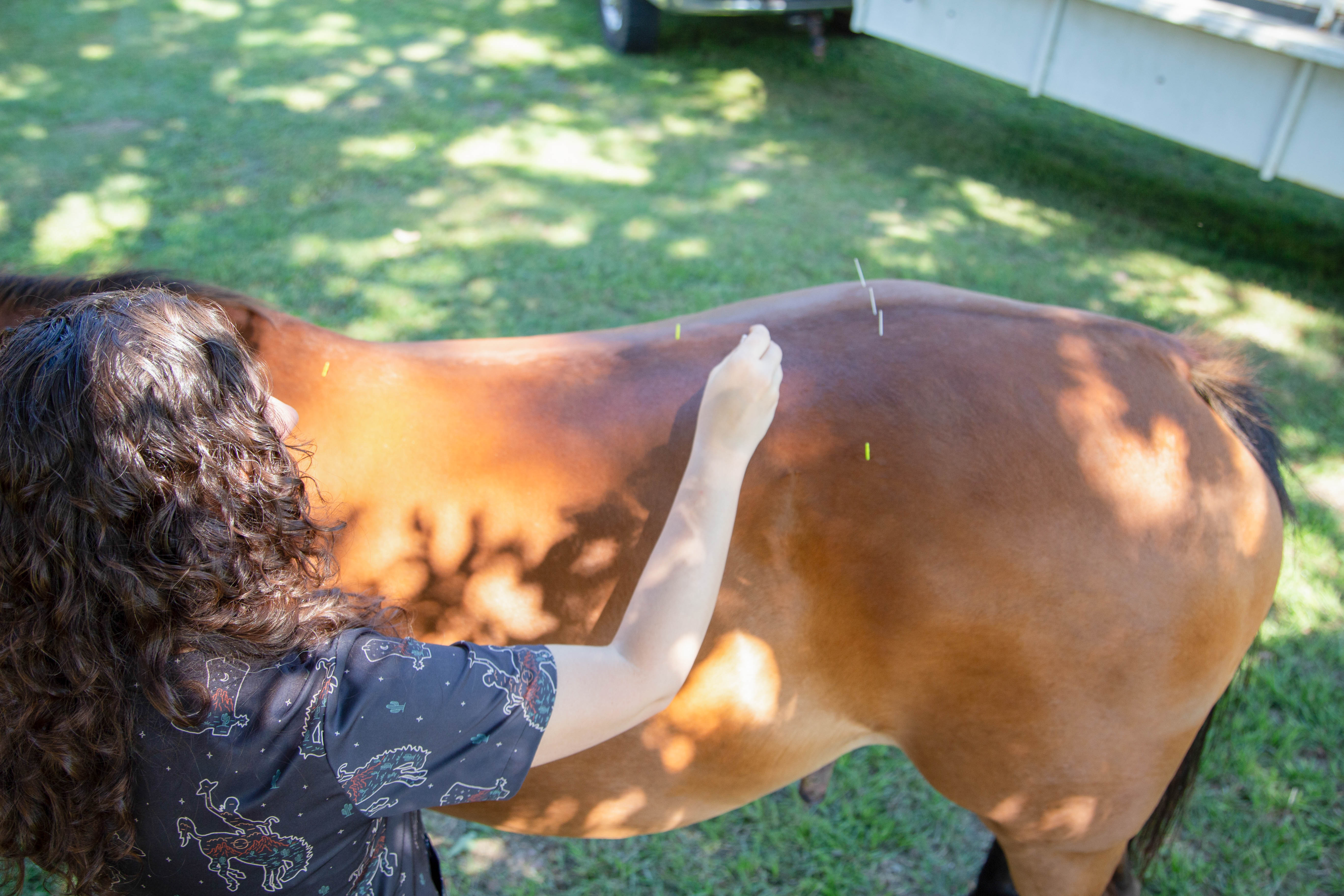
For many horses, chiropractic care is most effective when combined with other integrative therapies such as acupuncture or laser therapy, both of which are also available through our mobile practice. We may also recommend targeted exercises, stretching routines, or changes in management to reinforce the benefits of each adjustment.
On-farm veterinary chiropractic care offers several advantages over traditional clinic visits. Horses avoid the stress of trailering and exposure to unfamiliar environments, making the experience more positive and allowing for more accurate evaluation of movement and behavior. Our mobile approach also enables us to observe your horse's work environment, footing, and daily routines, providing valuable insights that inform each treatment plan. For more details on how our chiropractic services can help restore mobility and relieve discomfort, you can explore our page on veterinary chiropractic care.
Preventing Mobility Issues: Tips for Horse Owners This Spring
While professional chiropractic care is invaluable, proactive management plays a critical role in keeping your horse sound and comfortable during the spring season. Paying attention to pasture conditions is essential; regular inspection and maintenance of turnout areas help prevent slips and strains caused by uneven or excessively muddy footing. Gradually increasing your horse's workload after winter gives muscles and joints time to adapt, reducing the risk of overuse injuries.
Daily grooming sessions provide an opportunity to check for heat, swelling, or sensitivity along your horse's spine and limbs. Gentle stretching and hand-walking can help improve flexibility and circulation, especially for horses coming back into work. If your horse wears a saddle, proper fit is crucial to avoiding pressure points or soreness that could contribute to discomfort. Attention to hoof care, including regular farrier visits and monitoring for uneven wear, supports balanced movement and minimizes stress on joints and the spine.
When integrating any new exercise or management practice, monitor your horse for changes in attitude or movement that may indicate discomfort. Promptly addressing subtle signs with rest or adjustment to routine can help prevent minor issues from escalating. For owners interested in a comprehensive, natural approach, combining chiropractic adjustments with therapies like acupuncture or laser can be especially effective.
When to Schedule a Veterinary Chiropractic Evaluation
Knowing when to seek professional help is vital for preventing long-term issues and supporting your horse's overall wellbeing. If your horse exhibits persistent lameness, uncharacteristic resistance under saddle, or recurrent soreness that does not resolve with rest, it's time to schedule an evaluation. Acute injuries, sudden changes in posture, or persistent reluctance to move forward should always be addressed promptly, as these may signal more serious problems requiring immediate attention.
For horses in regular work, periodic chiropractic check-ins—especially at the start of the spring season—can help catch minor misalignments before they impact performance. Horses recovering from musculoskeletal injuries or compensating for chronic conditions often benefit from a coordinated care plan that includes chiropractic adjustments as well as conventional veterinary management.
If you are unsure whether your horse's signs warrant professional evaluation, Dr. Crews is happy to provide guidance. We encourage horse owners in Granby and surrounding areas to take advantage of our mobile, on-farm services for reduced handling stress and personalized care. Integrative veterinary medicine emphasizes early intervention, natural healing, and the importance of addressing the whole animal for optimal results.
Why Choose Mobile Integrative Veterinary Care for Your Horses
On-farm chiropractic care offers unmatched convenience and comfort for your horses, while also supporting a more accurate understanding of their daily routines and challenges. At Full Quiver Integrative Veterinary Solutions, we serve horse owners throughout Granby and neighboring communities with a commitment to holistic, evidence-based care. Dr. Crews combines traditional expertise with advanced integrative therapies, providing individualized treatment plans and compassionate support for every horse.
Whether you manage a working ranch, train performance horses, or care for treasured companions, our ambulatory services ensure your horses receive the care they need, right at your barn or pasture. As a mobile mixed animal practice, we understand the unique needs of each operation and provide a full range of services to keep your horses healthy all year round.
If you are searching for a "farm vet near me" who specializes in on-farm equine chiropractic care, Dr. Crews is ready to help you this spring and beyond. To learn more about the benefits of integrative veterinary medicine or to schedule an on-farm visit, explore our integrative veterinary services or call Dr. Crews at (417) 281-4406. We are dedicated to supporting the health, comfort, and performance of your horses—right where they live and work.
Dr. Crews is based in the Santo, TX, Granbury TX, Fairfield/Mexia TX, Godley TX, Hico TX area and travels throughout southwest Texas and north-central Texas. To schedule an on-farm or home visit, call (417) 281-4406. Full Quiver Integrative Veterinary Solutions is here to keep your horses moving comfortably, season after season.